If you live in a neighborhood with a Homeowners Association (HOA), you already know the deal: they collect dues, set rules, and try to keep the place looking nice. At least, that’s how it’s supposed to work. But sometimes a board can change from “helpful neighborhood leaders” to “rogue regime,” and it can happen to any community.
To help you stay on the lookout, here are the top warning signs that your HOA board may be turning into something you’ll want to keep a closer eye on.
Most HOAs have a process for making rules. It usually includes things like meetings, votes, and giving people notice. But a problematic board starts acting like a king or queen issuing royal proclamations:
“All mailboxes must now be painted sunset beige by Friday.”
“No more basketball hoops—even the portable ones.”
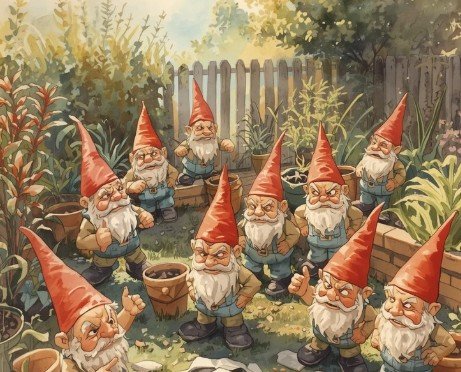
“Your lawn gnome army is now considered a security hazard.”
If your board is making rules faster than you can say “What page is that on?” then something is off.
A healthy HOA board should be willing to explain their decisions. A problematic one treats questions like personal attacks.
You might ask, “Why did our fees go up $80 a month?” and they respond like you questioned their entire existence:
“We don’t have to explain that.”
“It’s complicated.”
“Please submit all questions in writing … and expect no response.”
If your board gets annoyed every time a homeowner wants information, it’s not a great sign. They work for the community—not the other way around.
Board meetings are where homeowners hear updates, raise concerns, and understand what’s going on. Unless, of course, your board prefers to hold meetings like they’re planning a secret mission.
Warning signs include: 1) meetings never being announced; 2) Meetings held at strange times with five minutes’ notice; and 3) Meeting minutes “accidentally” disappearing like socks in a dryer.
If the board avoids transparency, chances are they’re avoiding accountability, too.
If your neighbor can park their boat in the driveway for six months, but you get a violation for leaving your trash cans out for five extra minutes, something’s wrong.
This is one of the biggest warning signs of a problematic HOA: selective enforcement. It takes many forms such as: rules are enforced rarely (when they feel like it); violations seem to depend on who the board likes; and, some people get warnings while others get fines straight away.
A fair HOA applies rules evenly. An unfair one applies them like that one teacher who clearly had “favorites.”
You should always keep an eye on the HOA’s budget. A problematic board may start spending large amounts without explaining why; hiring contractors who just happen to be friends or relatives; avoiding giving financial reports like they’re guarding state secrets.
If you ask for financial statements and the board suddenly acts like you asked for nuclear codes, that’s a giant red flag.
HOA boards must hold real elections. The process for determining who holds the power is also ripe for abuse. so many things could and do go wrong. Bad signs you could notice include:
If your HOA elections feel more like a coronation ceremony, you may have a board that is holding onto power a little too tightly.
Your dues are mostly supposed to go toward things like replacing and repairing community owned property like roads, parking lots, landscaping and pools.
If all those things are falling apart but the board keeps insisting “everything is totally fine,” that’s a sign of mismanagement. When the grass looks like a jungle and the pool looks like a biology experiment, but somehow the board still wants a fee increase, something isn’t adding up.
Sure, rules matter. But a problematic board goes overboard—way overboard.
Examples include:
Your holiday lights were still up January 2nd.
Your flower pot was 3 inches too far to the left.
Your car tire touched—touched—the line in your space.
If you find yourself getting daily violation letters, you might not be the problem. The board might be running out of hobbies.
Any healthy board should be fine with homeowners paying attention. After all, it’s your neighborhood and your money. But some boards react badly when people show up at meetings, ask for documents, or question decisions. If they start shutting down homeowner comments, limiting questions, or acting offended by simple requests, then they may be trying to keep things hidden.
Finally, one big warning sign is the general vibe. If everyone seems stressed, frustrated, or downright angry at the HOA, it’s worth paying attention. People talk, and if most of those conversations start with “Can you believe the board did that?” something is probably going wrong.
Your HOA board should be a group of neighbors working together to keep the community running smoothly—not a group of mini-dictators. If you spot one or two of these warning signs, it may just be time to ask questions. But if you spot several, it might be time for homeowners to get involved, attend meetings, and maybe even run for the board themselves.
After all, the best way to fix a problematic HOA board is to replace it with a good one—preferably one that doesn’t issue fines for having the wrong shade of mulch.
If you have an abusive HOA or Condo board, contact us for a consultation so we can discuss your situation and see what we can do to help.