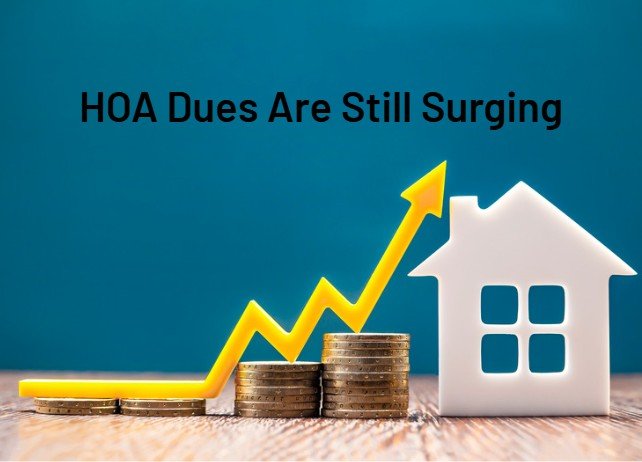
If you live in a homeowners association (HOA) or condominium association, you have probably noticed a frustrating trend over the last several years: HOA fees seem to be rising faster than ever.
Many homeowners open their annual budget notice only to discover that their monthly assessment has increased again. Some communities are seeing increases of five percent, ten percent, or even more in a single year. In some cases, owners are also facing large special assessments on top of their regular dues.
As HOA fees continue to climb, many residents are asking the same question: Why is this happening?
Association boards often point to inflation, rising insurance premiums, and higher maintenance costs. Homeowners, on the other hand, sometimes wonder whether poor financial management or unnecessary spending is contributing to the problem.
The truth is that there is rarely one single cause. Most fee increases result from a combination of economic pressures and decisions made by the association’s leadership. Understanding these factors can help homeowners evaluate whether an increase is reasonable or whether deeper questions should be asked.
How HOA Fees Are Supposed to Work
Before examining why fees are increasing, it helps to understand what HOA assessments are designed to pay for.
HOA fees fund the operation and maintenance of common areas and shared amenities. Depending on the community, these expenses may include landscaping, snow removal, pool maintenance, clubhouse upkeep, security services, management company fees, utilities, legal expenses, reserve contributions, and insurance coverage.
The board of directors prepares an annual budget estimating how much money the association will need to operate during the coming year. That budget is then divided among homeowners through regular assessments.
In theory, HOA fees should closely match the actual cost of maintaining the community. When expenses rise, assessments usually rise as well.
Inflation Has Made Almost Everything More Expensive
One of the biggest reasons HOA fees have increased in recent years is simple inflation. The same economic forces affecting grocery stores, restaurants, and utility companies also affect community associations.
Landscaping companies have higher labor costs. Contractors pay more for materials. Fuel prices affect transportation costs. Cleaning supplies, maintenance equipment, and replacement parts all cost more than they did just a few years ago.
If an HOA paid $50,000 annually for landscaping services in 2020, that same contract might cost substantially more today. Similar increases can occur across dozens of budget categories.
Many associations kept fees artificially low for years and are now struggling to catch up with inflation. When costs increase gradually over time but assessments remain unchanged, eventually a larger increase becomes unavoidable.
The Insurance Crisis Affecting HOAs and Condominiums
Perhaps the most dramatic budget increase facing many associations today involves insurance. Property insurance premiums have risen sharply across much of the United States.
Insurance companies have faced significant losses from severe weather events, wildfires, hurricanes, flooding, and other natural disasters. At the same time, construction costs have increased, making claims more expensive to pay. As a result, insurers have raised premiums, increased deductibles, or in some cases stopped offering coverage in certain markets altogether.
For condominiums and HOAs, insurance is not optional. Governing documents and state laws typically require associations to maintain specific types of coverage.
When insurance costs double or triple, the association has little choice but to find additional revenue. That revenue almost always comes from homeowners through increased assessments.
In some communities, insurance alone accounts for a significant portion of recent fee increases.
Labor Shortages Are Driving Up Service Costs
Another factor putting pressure on HOA budgets is the rising cost of labor. Community associations depend on workers to maintain common areas, repair facilities, manage landscaping, clean buildings, and perform countless other services.
Many industries have experienced labor shortages in recent years. To attract and retain workers, employers have increased wages and benefits. Those increased costs are eventually reflected in vendor contracts and service agreements. The landscaping company, pool contractor, and maintenance provider serving your community may all be charging more because their own payroll expenses have increased.
Even associations that try to control spending often find that vendor bids are substantially higher than they were just a few years ago.
Deferred Maintenance Can Lead to Sudden Fee Increases
Not every HOA fee increase is caused by external economic factors. Sometimes boards delay maintenance projects in an effort to keep assessments low.
While this approach may be popular in the short term, it often creates larger financial problems later. Roofs, roads, elevators, pools, fences, and building exteriors all require ongoing maintenance. Delaying repairs rarely makes the problem disappear. Instead, deterioration continues until the repair becomes more expensive.
For example, a roof replacement that might have cost $100,000 several years ago could cost significantly more if leaks and structural damage are allowed to develop.
When associations postpone necessary work for too long, homeowners often face substantial fee increases or special assessments to address accumulated problems.
Reserve Fund Shortages Are Becoming More Common
A healthy reserve fund is one of the most important signs of a financially stable association.
Reserve funds are savings accounts used to pay for major future repairs and replacements. These funds help cover expenses such as roofing projects, pavement replacement, siding repairs, and mechanical system upgrades.
Professional reserve studies estimate how much money an association should save each year to prepare for these future costs. Unfortunately, some boards underfund reserves in order to keep monthly assessments low. While this may appear attractive to homeowners in the short term, it often creates serious financial challenges later.
When major repairs become necessary and reserve accounts lack sufficient funds, boards may be forced to increase assessments dramatically or impose special assessments on homeowners.
Many communities experiencing large fee increases today are attempting to correct years of inadequate reserve funding.
Could Poor Financial Management Be Part of the Problem?
While inflation and insurance costs are real challenges, homeowners should not automatically assume that every fee increase is justified. Poor financial management can also contribute to rising assessments.
Examples may include weak budgeting practices, failure to obtain competitive bids from vendors, excessive spending on nonessential projects, lack of oversight of management companies, or inadequate long-term planning.
Some associations rely heavily on emergency repairs because preventative maintenance was neglected. Others may repeatedly hire the same vendors without exploring more competitive pricing.
In rare cases, fraud or financial misconduct can occur. Although most HOA board members are volunteers trying to serve their communities responsibly, there have been documented cases involving embezzlement, kickbacks, or misuse of association funds.
This is why transparency is so important. Homeowners should have access to budgets, financial statements, reserve studies, and other records that help explain how association funds are being spent.
Warning Signs Homeowners Should Pay Attention To
A fee increase does not necessarily indicate a problem. In many cases, increases are reasonable and necessary. However, homeowners may want to ask questions when certain warning signs appear.
For example, repeated special assessments can indicate poor long-term planning. Large reserve fund deficits may suggest that previous boards failed to save adequately for future expenses. Frequent budget shortfalls, delayed maintenance projects, or a lack of financial transparency may also deserve closer examination.
If homeowners are consistently being told that emergencies require additional funding, it may be worth reviewing whether those emergencies could have been anticipated and planned for in advance.
What Homeowners Can Do When Fees Keep Rising
If you are concerned about increasing HOA fees, the first step is gathering information. Review the association’s annual budget and compare it to prior years. Examine how much spending has increased in major categories such as insurance, maintenance, utilities, and management fees.
Ask whether the association has a recent reserve study and whether reserve funding levels are meeting professional recommendations.
In Maryland, your community is required to have a reserve study done every 5 years. It just so happens that 5 years ago was before the global surge in inflation following the pandemic. Expect any new reserve study to come back with a higher yearly reserve deposit requirement.
Attend board meetings and ask respectful questions about major expenses and future projects. Understanding the reasons behind a fee increase often provides valuable context.
Homeowners who remain concerned may also consider becoming more involved in association governance. Serving on a committee, attending meetings regularly, or running for the board can provide greater visibility into how financial decisions are made.
HOA fees are increasing for many legitimate reasons. Inflation has raised the cost of nearly every service associations purchase. Insurance premiums have surged in many areas. Labor shortages and higher construction costs have made maintenance and repairs more expensive.
At the same time, some communities are experiencing the consequences of years of deferred maintenance, inadequate reserve funding, or poor financial planning.
For homeowners, the key is understanding which factors are driving the increase in their specific community. A well-managed association may still need to raise fees because of economic realities. Conversely, rising assessments can sometimes expose deeper financial management problems that deserve scrutiny.
The most successful associations balance fiscal responsibility with transparency. They plan for future expenses, maintain adequate reserves, communicate openly with residents, and avoid pushing today’s costs onto future homeowners.
When boards follow those principles, fee increases may still occur—but homeowners are far more likely to understand why they are necessary and where their money is going.